Essential Supplies
How to make sure people can get food, medicines and other essentials when services are disrupted.
Why this is important
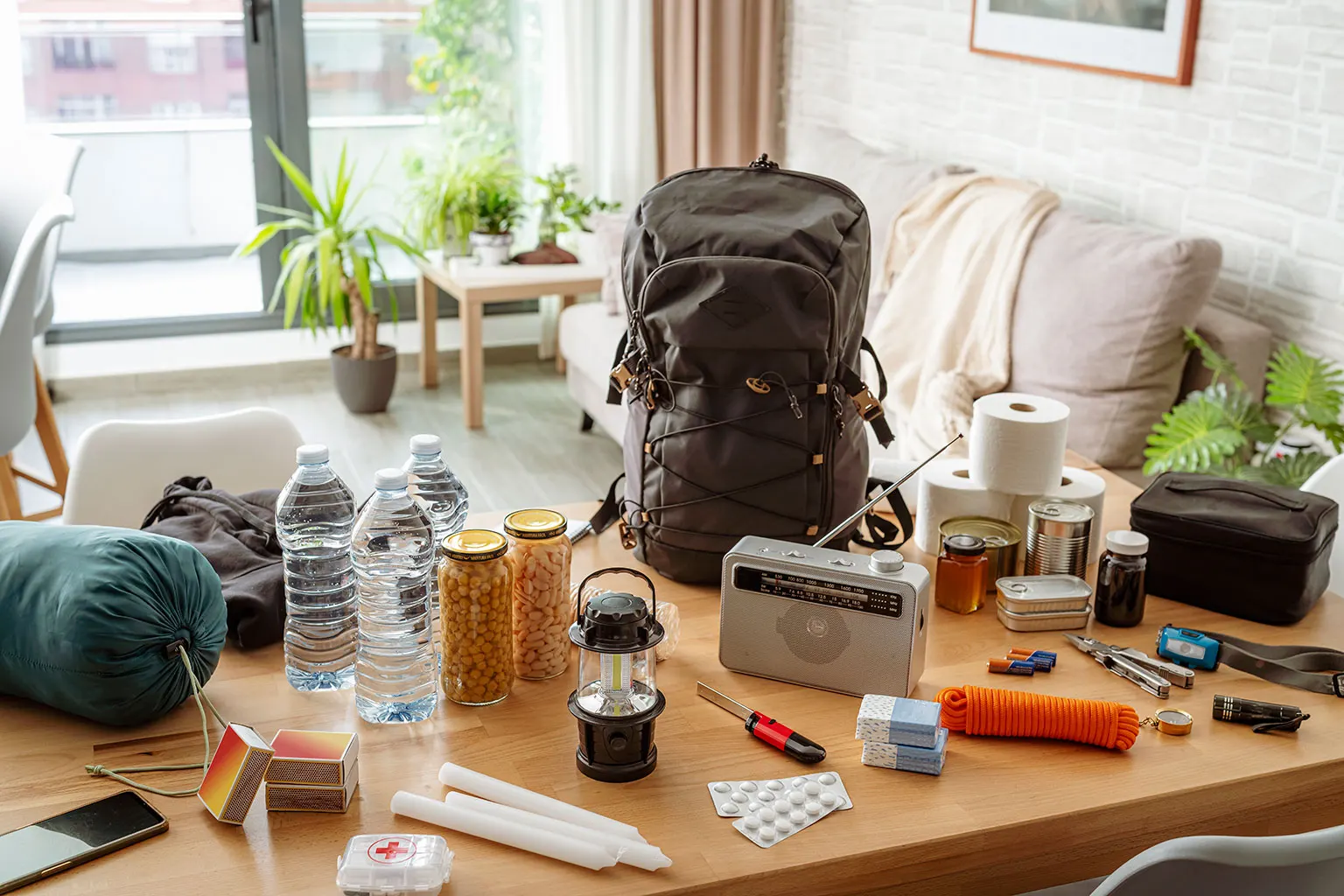
Making sure that the community have the right supplies between them is one of the most important parts of being ready together. This can include, for example:
- Food
- Clean water
- Essential medicines
- Tools like torches, batteries, and wind-up radios
Knowing how to get and share essential supplies within your community group will help your members to help each other and work together if an emergency happens.
During an emergency supply chains can break down. A supply chain is all the steps that get goods and services from where they are to where they need to be.
Sometimes, an emergency can increase demand for some supplies by so much, in such a short time, that there isn’t time to restock the shelves in shops.
Sometimes an emergency may make it difficult to get supplies from one place to another.
To cope when supply chains break down, people need to share information, skills and responsibility. The People and Skills module has more information on skills.
Sharing supplies helps those you know in your community to cope. Working together and planning ahead makes problems easier to deal with, and it helps your community recover faster.
What can my community group do?
Community groups can play an important role in helping their broader neighbourhoods to prepare and respond to emergencies. This includes helping people get the right supplies before and during an emergency.
Get to know responder organisations
Get to know responder organisations before an emergency happens. A responder organisation is an official organisation that helps deal with an emergency, like the emergency services.
If an emergency happens, they will be working to get the right support to the right places in your community. Your community group might be able to support them.
Build shared supplies
Talk to your community about buying supplies in bulk to share. This might include food, torches, power banks or batteries, and more.
Food
Buy food items that last a long time, such as dried pasta, tinned food and energy bars. It’s a good idea to have some foods that do not need to be cooked or kept in the fridge. This is important in case the power or electricity is not working. If your community group is buying tinned food, don’t forget tin openers.
Bottled water
The World Health Organisation recommends that each person needs 2.5-3 litres of drinking water a day. Your group members will need more water for cooking and washing. Some people will need more water for pets, medical devices, and to mix baby formula.
Buying in bulk can cost less than each home buying on its own. Your community group may also want to share things that add flavour to food, like salt, oil, stock and spices - which cost little and keep well.
Gift or donate emergency preparedness boxes
Your community group could organise boxes with food and other emergency supplies. These boxes can be given to people in your community, especially those who may need additional help.
This helps more people get ready for an emergency.
When your group makes these boxes, think about what the people getting the boxes are likely to need and want. List what is on each box on the label, and check use-by and best-before dates for food.
The Prepare website has more advice on supplies.
Share storage space
Find places in your local area where you can store shared supplies with other groups in the wider community. Look for spaces in community buildings that are cool, dark, and dry. Some people in your community may also be able to offer space in homes, businesses, and other buildings.
This can be very helpful, particularly if some members of the community do not have space to store many bulky items, like bottled water.
TOP TIP: Sometimes similar products can take up very different amounts of storage. For example, spaghetti can take up much less space than some other kinds of pasta. One 5 litre bottle of water takes less space than five 1 litre bottles of water.
Good storage helps food last longer. Where food and water is stored matters as much as how it is packed.
Not everything has to be stored in kitchen cupboards, so think creatively about other suitable storage spaces available in your community’s spaces.
Plan where shared food could be stored if the power goes off and freezers and fridges stop working. In a power cut, keep fridge and freezer doors shut as much as you can to keep the contents cold.
Your community group could also share storage with other community groups for other things you may need in an emergency, like first aid kits, batteries, and tools.
Share ways to cook if the power goes off
Does your community have a way to cook that still works if the power goes off? Consider that:
- Hiking groups may have camping stoves
- Community groups may have access to a barbecue
- Some community buildings may have a generator
Can your group work with other local community groups to share ways to cook without power? Cooking together also uses less fuel. One generator can power cooking for several households.
Never use a barbecue or generator indoors, as they give off carbon monoxide. This is a poisonous gas that you cannot see or smell.
Always make sure food hygiene advice is followed when cooking for other people.
Collect rainwater
Could your community group fit water butts? A water butt is a large container that collects rainwater from the roof.
Many UK water companies offer discounted or free water butts, working with Save Water Save Money.
If the water supply stops, this can be used as ‘greywater’. Do not drink this water.
Some towns and villages have wells and springs, the Environment Agency can test them before an incident to confirm if the water is drinkable, or to be used as greywater.
Greywater
This can be rain water or water from your home that has been used, but is not very dirty. It comes from:
- Showers and baths
- Bathroom sinks
- Washing machines.
In an emergency you can use it to
- Flush toilets
- Water a garden
It is not safe to drink.
Blackwater
This is much dirtier. It comes from
- Toilets
- Kitchen sinks (which can contain food scraps and other waste)
Do not reuse blackwater.
Plan for power cuts
Plan for how your community would come together and help each other in a power-cut.
What power could your community use if mains power goes off? Find out if there are other power sources and generators that the community could use in an emergency.
You could use:
These only help if you have plans in place and people know about the plans. Make sure that people know how to use any generators safely, including keeping them outside.
NOTE: Standard solar panels may not be able to work in a power cut. They need to be connected to a battery storage system and a compatible inverter.
TIP: Keep power banks and batteries charged.
Plan how to move supplies
Plan how your community group could help move people and supplies in an emergency. People and supplies need to be able to get to and from the main places where people hand out supplies. These are often called distribution points.
Talk through which people in your group have access to a car or van and could help.
There may be some members of your community who need help to get the supplies they need. Before an emergency, they should sign up to the Priority Services Register if they are eligible. This will help them get additional support if there are problems with the water or power supply.
Your group may be able to help other groups to get the support they need. The first step is to know who in the community may need support, and what support they may need.
Think about how your group could help other groups. Check in on neighbours who may need additional help. Think creatively about the support you could offer. For example, a local cycling group, walking club or other organisation could help get supplies to people who find it difficult to reach nearby shops.
For more details on how to support people who might need additional help in an emergency, read Supporting People with Additional Needs.
During an Emergency
Focus on getting the right supplies to the right places.
1. Find out what people need before asking for donations
When an emergency happens, people often want to help by donating food, clothes and other items. This generosity can make a real difference, but it works best when donations match what people actually need.
Find out what is needed first, working with your council, charities, community organisations and other local groups. Then let people know exactly what would be useful and where to take it.
Try not to ask for general donations of items. Donations that are not needed can:
- take up storage space, which can cost money
- make it harder to store the supplies people do need
- take up volunteers’ time to sort through
- cost money to store, move or dispose of.
It can be more effective to collect financial donations, instead of donations of items
Your group can encourage people to donate to existing fundraising campaigns instead. For more details on collecting financial donations, see the Money and Finances module.
Buying things locally also helps
It supports local businesses while things are disrupted.
Make sure supplies reach the right places
Include people from each affected area in the groups that decide how to hand out supplies. This helps make sure that everyone gets a fair share.
After the Emergency
An emergency can leave behind damaged furniture, building materials and other waste. Once it is safe to do so, some of these things may be suitable for reuse rather than being thrown away.
Your community group could work with local repair groups, charities, craftspeople or businesses to find safe ways to reuse or repurpose items. This is sometimes called upcycling.
For example, safe timber could be turned into furniture or community projects, or repairable items could be restored and used again. Projects like these can also create opportunities for local people to learn skills, volunteer or earn an income.
Not everything will be safe to reuse. Items affected by floodwater, fire, chemicals or other hazards may need specialist handling or disposal. Follow advice from your council and emergency services before collecting, moving or reusing anything.