Places and Spaces
You don’t always need to create a new community space. Sometimes the best place to bring people together is somewhere they already feel they belong.
How to identify the buildings, facilities and community spaces that could help during an emergency.
Why this is important
Places in your community can help people find information and support in an emergency. They can also be places where people meet and feel connected. They may be physical spaces, or online spaces.
Responder organisations who are official organisations that help deal with an emergency, will already have plans for some places. Their plans will include emergency shelters, vaccination centres and places to hand out essential supplies.
Many other places in your local area can still help people connect and find information and support. Online spaces also play a vital role.
There will be different places in your community where people feel safe, connected, and welcome. These places can be particularly important in planning for and responding to an emergency.
What can my community do?
Work with official emergency responders
Tell your Local Resilience Forum or equivalent about places in your area that could help in an emergency. Share your plans for how your group can offer additional support before an emergency happens.
Each area of England and Wales has a Local Resilience Forum. Scotland has Regional Resilience Partnerships and Northern Ireland has Emergency Preparedness Groups. All these groups bring together the emergency services, council, NHS and other organisations to plan for emergencies.
An online search will provide you with contact details for your local Forum, Partnership or Group.
Plan how a space your group runs could help
If your group runs a space, you may be able to use it to help emergency planning and response.
Could your space be used as an emergency rest centre?
Speak to your council first. They can tell you what would be needed and whether the space could be suitable.
Make sure they know:
- where the space is and who manages it
- how many people it could comfortably hold
- how accessible the building and surrounding site are
- what toilets, washing facilities and kitchen facilities are available
- whether there is heating, lighting and somewhere for people to sit or rest
- what useful resources it has, such as storage space, Wi-Fi, solar panels or a generator if there is a power cut
- whether there are private or quiet spaces that could be used
- what parking and transport links are available
- who has keys or can open the building in an emergency
- when the building is normally available and whether it could be opened at short notice
- whether there are any risks or limitations the council should know about.
A space that is not right for an official emergency centre can still help in other ways.
It could work as a community-led emergency hub or ‘place of safety’. This is a place to share information, organise volunteers, and help coordinate support in an emergency.
Map the spaces in your local area
Bring together local people from different groups and think about the important places in your area where people feel safe and connected. This might include:
- Community buildings, like community halls and community hubs
- Sports clubs, like a football, cricket or a bowls club
- Places of worship, like churches, mosques, synagogues and temples
- Cultural spaces, like arts centres, libraries, theatres and museums
- Local cafes or other businesses
- Green spaces, which are areas with grass or trees, like parks
- Blue spaces, which are areas near water, like beaches, rivers, canals and lakes
Think about places that could become unsafe or difficult to reach during an emergency. Mark these on your community map. For example:
- streets and buildings that are at risk of flooding
- steep slopes or areas where landslips could happen
- roads, bridges or paths that could become blocked
- places with only one way in or out
- areas that could be cut off by severe weather
- buildings or meeting places that rely on electricity or other essential services.
You don’t need to work out all the risks yourself. You can check the flood risk for your area online and look at your Community Risk Register. This is a public document that explains the main risks that could cause disruption in your area.
Where can I find my Community Risk Register?
In England, your Local Resilience Forum publishes a Community Risk Register. You can find your Local Resilience Forum and a link to its register on GOV.UK.
In Wales, Community Risk Registers are published by the four Local Resilience Forums.
Scotland uses Regional Resilience Partnerships, and information on local risks and Community Risk Registers is available through Ready Scotland.
Northern Ireland uses Emergency Preparedness Groups.
Once you know where the risks are, think about how they could affect the places you plan to use during an emergency. If a building, route or meeting place could become unsafe or inaccessible, identify an alternative in advance.
Talk through where people go to for help
Using the information you have gathered, as a community group, think through:
- Where people would go for help during an emergency
- Where people would go to find information that they can trust
- Which spaces most people know about
- Which spaces only the groups that use them know about
- How other, less well-known spaces could also help
Warm and cool spaces are places in the community that are free, welcoming and safe. Any member of the public can go, and they can also reduce loneliness and isolation.
| Warm Spaces | Cool Spaces |
|---|---|
| A warm space is a free, safe, heated community location where people can gather when the weather is cold or when struggling with heating costs. | A cool space works in the same way as a warm space, but during hot weather. They are indoor spaces to cool down, rest and shelter from the heat. |
Think about local transport links
As a group, talk about your local transport network. Think about:
- How people travel between places
- Which transport people rely on most to get to work, school or to access medical care
- Where transport could get blocked or too busy
- How different types of emergencies could affect travel
- Whether locked gates or private land could stop people getting through in an emergency. If so, talk to the people who manage the buildings and land about emergency access.
When you are doing your Skills Audit consider how your group could help with transport in an emergency. A skills audit is a list of the skills people in your group have. You can read the People and Skills module here.
For example:
- Your group could put people who find it hard to get around in touch with people who have a car
- A motorbike club could run errands for people who rely on local public transport if it is not working
- A local taxi or private hire firm could agree how it might help people who have difficulty getting around
- A cycling group could deliver essential items if roads are congested or public transport is disrupted
- A community minibus could help people get to a support centre or other essential services
- Local delivery drivers or courier businesses could help move essential supplies around the community
- A walking group could help deliver information or check in on people nearby when other forms of transport are disrupted.
Create spaces that bring people together
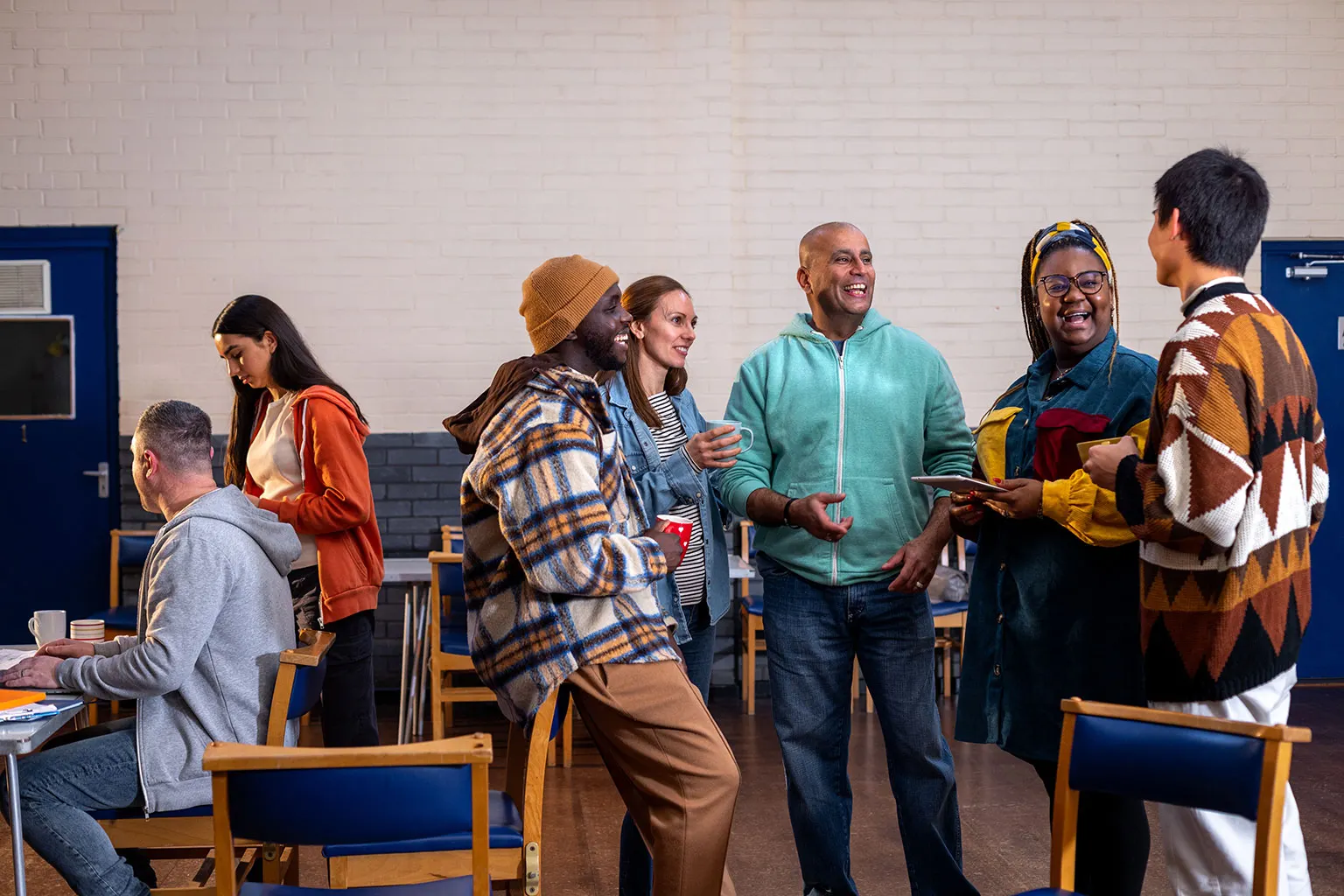
Community spaces can bring together people of different ages, cultures and backgrounds. Over time, these connections can build trust and help people feel part of their community.
Think about how your spaces could work for more people. This might mean making sure they are accessible for wheelchair users, people with limited mobility and people with buggies or prams.
The best way to find out what people need is to ask. Talk to people who already use the space, but also speak to people who don’t. What would make it easier or more comfortable for them to come along?
Remember that not everyone feels comfortable in the same places. Some people may be more likely to use places they already know and trust, so it’s a good idea to work with other local groups to understand where these are. They could include spaces run by:
- local charities and voluntary groups
- faith groups
- residents and neighbourhood groups
- sports and social clubs
- cultural or community organisations
- libraries
- schools, colleges and nurseries
- cafés, pubs and social clubs
- barbers, hairdressers and salons
- local shops, markets and shopping centres
- community gardens and allotments
- parks, playgrounds and outdoor meeting places
- gyms, leisure centres and swimming pools
- Men’s Sheds and repair cafés
- food banks, community kitchens and community fridges
- launderettes
- housing association communal areas
- workplaces and business parks
You don’t always need to create a new community space. Sometimes the best place to bring people together is somewhere they already feel they belong.
Make buildings work better in an emergency
If you are improving a space your group runs, think about how it could work better in an emergency.
You can also do this when there are new building plans in your area.
You could add:
- Covered areas where people can gather outside
- A way to collect rainwater
- Solar power or a backup generator
- Entrances that older people, people with young children and people with disabilities can use easily.
You may be able to work with local people or professionals to improve or build shared spaces . These can meet every day needs and provide protection in an emergency .
Remember online spaces
Online spaces can be an important part of a community, helping people connect, share information and support each other.
These might include:
- local Facebook or Nextdoor groups
- WhatsApp groups for streets, schools, sports clubs or community groups
- group chats used by youth groups and young people
- online groups linked to schools, colleges or universities
- local forums and community websites
- social media accounts run by trusted local organisations.
Think about the online spaces that different people in your community already use. Young people, for example, may use different platforms and group chats from older residents.
These networks can help share trusted information during an emergency and help people stay connected. It’s a good idea to encourage people to build these connections before they are needed.
Remember: not everyone is online or uses the same platforms, so important information should be shared across many different platforms and spaces.
During an emergency
Follow advice from the emergency services, your council and other organisations responding to the emergency.
If it is safe to do so, your community should put your plans for the places you run or support into action. Work with other community groups and official emergency responders, including your council, so that people know where they can go and what support is available.
Depending on the emergency and what has been agreed with local responders, community spaces might be used:
- to share trusted information and signpost people to support
- as somewhere for people to meet and support each other
- to distribute food, water or other essential supplies
- as a base for community volunteers
- to charge phones or access the internet, if power and Wi-Fi are available
- to provide a quiet or private space for people who need it
- to support activities for children and families
- to provide facilities such as toilets, seating or somewhere warm.
Remember: do not open your space as an official emergency rest centre unless this has been agreed with your council. Your local emergency response procedures should be followed. Even when plans are in place for the space to be used as a potential rest centre, you must follow the advice of emergency responders about whether a building or area is safe to use.
10. After an emergency
Places can continue to play an important role long after the immediate emergency has ended. They can give people somewhere to reconnect, find support and remember what happened.
For example, community spaces could provide somewhere:
- to meet others who have been affected
- to hold peer-support groups or community activities
- to access information and ongoing support
- to hold community meetings about recovery
- for quiet reflection
- to hold an anniversary event or remembrance activity
- to create a temporary or permanent memorial.
Remembrance does not need to be a large event or permanent memorial. Communities might plant a tree, display photographs and stories, hold a community walk, light candles or simply bring people together to reflect. Talk to people affected before deciding what would feel appropriate.
11. Remembering what happened
After some emergencies, people may leave flowers, messages, photographs or other tributes at or near the place where something happened. These are sometimes called spontaneous memorials.
Community groups can help care for these places and work with the council and people affected to decide what should happen to tributes over time. After the 7 July 2005 London bombings, for example, flowers left at Liverpool Street station were later moved to the London Memorial Garden, while flowers that had withered were composted and returned to London’s green spaces.
Be particularly careful when making decisions about memorials or anniversary events. People directly affected by the emergency should be involved in deciding whether and how it is remembered. What feels comforting to one person may be difficult for another.
The National Emergencies Trust guidance emphasises that commemoration can support long-term recovery, but can also bring back difficult memories and feelings. More guidance can be found here
For guidance on holding events after a crisis, visit Events.